Loops Are Not Cheating: A Beginner's Guide to Working With Samples

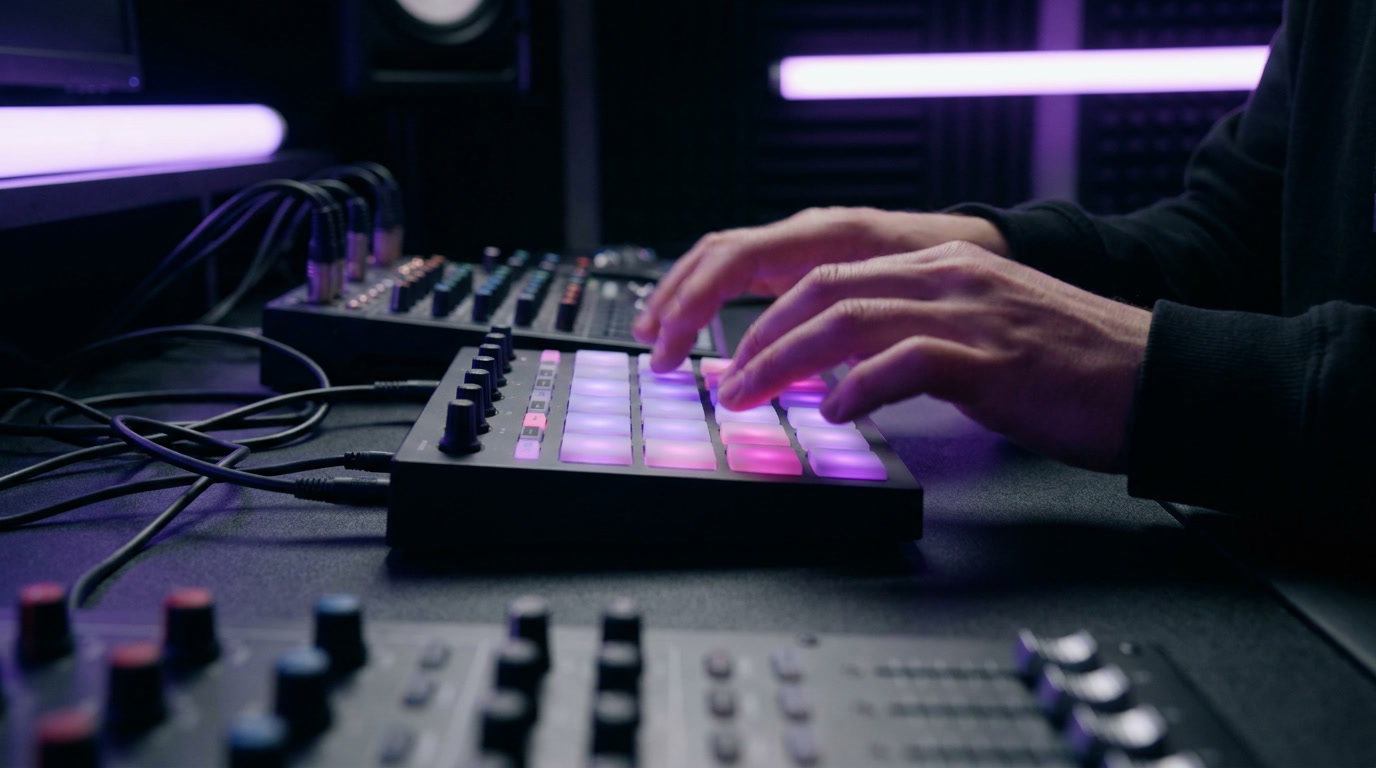
Let's retire the guilt first
Every few months a beginner tells me, almost whispering, that they used a loop. As if the entire history of hip-hop was not built on James Brown drum breaks, as if disco strings did not become house records, as if half the biggest hits of the last decade did not start life as a loop pack melody. Sampling is not a shortcut around musicianship. It is a different musicianship: curation, recontextualization, and arrangement.
Nobody asks a film director whether they built the camera.
Know your source, know your rights
Three broad lanes, with very different rules:
- Royalty-free loops. Loop libraries and packs made to be used. You can build and release freely. This is where beginners should live.
- Copyrighted recordings. Sampling a released song requires clearance for both the recording and the composition. Uncleared samples on a release can cost you the whole song later. Learn this before you upload, not after.
- Your own recordings. Sample yourself: your voice, your kitchen, your old demos. Free, legal, and automatically original.
The loops inside the Volmix library fall in that first lane, sorted by genre, which makes them a sane starting point when you just want to write.
The craft is in the transformation
Dropping a loop and pressing record is a demo. Making it yours is a process, and none of these moves require expensive tools:
- Chop it. Cut the loop into 4 or 8 slices and rearrange them. Even swapping two slices creates a melody the original author never wrote.
- Repitch it. Shift the loop up or down 2 to 5 semitones. Pitching up brightens and adds urgency; the sped-up soul sample built entire careers. Pitching down adds menace.
- Restructure time. Take a 4-bar loop and use only bar 3. Loop one half-bar into a hypnotic stutter. The most interesting bar of a loop is rarely the first one.
- Stack and subtract. Layer two loops from different packs in the same key, then mute pieces of each. The Venn diagram overlap becomes a texture neither had alone.
- Filter and FX. Roll off highs for a verse, open the filter for the hook. One loop, two energies, free arrangement.
Keys and tempos without tears
Two loops can only be friends if they agree on key and tempo. Loops are usually labeled, like Am 90 BPM, so start by matching labels exactly. Next step up: relative keys, A minor and C major share the same notes and mix cleanly. Tempo-wise, modern time-stretching handles moves of a few BPM invisibly; stretch a 90 BPM loop to 140 and it will warble, so do not force distant marriages.
If a combination sounds wrong, trust your ear over the label. Mislabeled loops are a proud industry tradition.
Build a whole song from one loop
Here is an exercise that teaches arrangement faster than any tutorial. Take a single 4-bar melodic loop and make four versions: filtered and quiet, chopped and rearranged, full and bright, and half-speed. Now assign them: intro gets the filtered one, verse the chopped one, hook the full one, bridge the half-speed one. Add drums and bass, and you have a complete, dynamic song from one borrowed idea, transformed four ways.
That is the whole philosophy in one exercise. The loop is the flour, not the cake. Your choices, what to keep, what to cut, where to place it, what to set against it, are the actual authorship. Use loops. Use them shamelessly. Just use them like a producer, not like a photocopier.
Marco Vidal
Marco has produced and mixed records for fifteen years, from bedroom demos to chart singles. He writes about beats, sound design and mixing — always with real numbers and zero mystery-making.
All articles by Marco Vidal